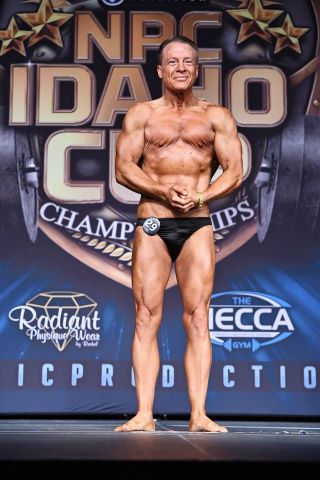
Paul Becker Natural Bodybuilder Still Competing At 64 Years Old
What does it really take to build an impressive physique naturally?
There are plenty of different opinions about the best way to build muscle. Some people believe you need to spend hours in the gym every day. Others believe you need extremely high training volume. There are endless debates about diet, supplements, training intensity and recovery.
But sometimes the best lessons come from decades of actually doing it.
I started working out when I was 16 years old, and bodybuilding has been part of my life ever since. Now, at 64, I’m still training, still challenging myself and, most importantly, still making progress.
Over the years I’ve learned that building muscle naturally isn’t about finding one magical workout, diet or supplement. It’s about putting together the right combination of progressive training, nutrition, recovery, sleep, consistency and patience.
In this interview, I’ll share how I got started, why I chose to remain a natural bodybuilder, how I train today, what I eat, the biggest mistakes I see people making and the role supplements can play in a natural bodybuilding program.
How Did You Get Started in Bodybuilding?
I started working out when I was 16 years old.
A friend of mine had been training and was getting good results. He encouraged me to start lifting weights, and he also told me that I should see the movie Pumping Iron.
After I saw the movie, I was hooked.
I’ve been training ever since.
At that age, I obviously didn’t know much about training or nutrition. I was simply fascinated by what could happen when you consistently challenged your body with weights.
After training for about two years, a bodybuilder told me about steroids. I decided that I would rather do it naturally.
That decision was important because I wasn’t interested in bodybuilding just to build the biggest muscles possible. I was also interested in health, fitness and longevity.
That philosophy has stayed with me throughout my bodybuilding career.
Why Did You Choose Natural Bodybuilding?
For me, natural bodybuilding has always been about more than appearance.
I wanted to build an impressive physique, but I also wanted the process of getting there to support my long-term health.
That’s one of the reasons I chose not to use anabolic steroids.
I believe there is something very rewarding about seeing what you can accomplish through intelligent training, proper nutrition, recovery and consistency.
Natural bodybuilding also teaches you patience.
You don’t build a great physique in a few months. It takes years of training and learning. You have to accept that progress can be slow at times and continue working toward your goal anyway.
How Has Your Training Changed Over the Years?
When I first started, I had no idea what I was doing.
I tried working out every day. I thought more sets and more workouts automatically meant more muscle.
Eventually, I realized that more isn’t necessarily better.
One of the biggest turning points in my training came when I read Mike Mentzer’s Heavy Duty book and learned about high-intensity training.
That completely changed the way I looked at bodybuilding.
Over the years, I learned how to adapt high-intensity training to my own individual exercise tolerance and recovery ability.
Today, I train three to four days per week, and my workouts generally last no more than about 45 minutes.
And at 64 years old, I’m still making progress.
That’s one of the biggest lessons I’ve learned from decades of training: your workout needs to be appropriate for your ability to recover from it.
The latest American College of Sports Medicine position stand on resistance training also emphasizes that effective muscle-building programs involve more than simply lifting the heaviest possible weights. Training effort, volume, frequency and load all play roles in producing adaptations.
If I knew at 16 what I know now, I could have saved myself a tremendous amount of wasted time and effort.
What Is Your Current Workout Routine?
My current routine is fairly simple:
Monday – Chest and Back
Wednesday – Legs
Friday – Shoulders and Arms
Occasionally, I’ll use Saturday to work on a lagging body part.
The biggest training principle I follow is progressive overload.
I’m always trying to improve.
That might mean adding another repetition, increasing the weight or improving my performance with the same weight while maintaining good form.
I also occasionally use different intensity techniques to keep my training productive and interesting.
These can include:
- Pre-exhaust training
- Drop sets
- Rest-pause sets
- Negative repetitions
- Other muscle-shocking techniques
I don’t believe you need to use every technique in every workout. They’re tools that can be used when appropriate.
I also think they can help keep training from becoming stale.
If you’ve been training for years, it’s easy for your workouts to become routine. Occasionally introducing a different challenge can make training exciting again.
How Important Is Progressive Overload for Natural Muscle Growth?
I consider progressive overload one of the foundations of natural bodybuilding.
Your body has a remarkable ability to adapt. If you continue doing exactly the same workout with exactly the same level of effort, eventually the stimulus becomes less challenging.
That’s why I’m always looking for some form of progression.
But progression doesn’t mean recklessly adding more weight.
Sometimes progression means performing more repetitions with the same weight.
Sometimes it means better form.
Sometimes it means controlling the negative portion of the repetition more effectively.
And sometimes it means increasing the resistance.
The goal is to gradually give your muscles a reason to adapt.
Resistance training is well established as a stimulus for muscle growth and strength, and current ACSM guidance emphasizes that resistance-training programs can be adapted across different populations and training approaches.
How Important Are Sleep and Recovery?
I believe recovery is one of the most overlooked parts of bodybuilding.
People spend a lot of time talking about workouts, but the workout is only part of the equation.
You stimulate the muscles in the gym. Your body then needs adequate nutrition and recovery to adapt to that training.
I try to get seven to eight hours of sleep every night.
My current three-to-four-day training schedule allows me to recover well, but I also pay attention to how I feel.
If it’s supposed to be a workout day and I don’t feel recovered from my previous workout, I’ll make an adjustment.
I might do a lighter, pump-oriented workout.
Or I might simply take another day off.
I don’t believe you should be afraid to take an extra rest day when your body needs it.
One of the advantages of having trained for decades is that I’ve learned to listen to my body.
What Does Your Bodybuilding Diet Look Like?
My diet is generally high in protein, moderate in carbohydrates and relatively low in fat.
During the off-season, I’ll generally increase my carbohydrate and fat intake somewhat.
When preparing for a bodybuilding contest, I’ll keep protein high while reducing carbohydrates and fats as needed to help reduce body fat.
I generally eat four to five times per day, usually about every two and a half to three hours.
Of course, the exact amount someone should eat depends on their body size, goals, activity level and individual circumstances.
The important point is that nutrition should support your training rather than fight against it.
Protein is particularly important for anyone trying to build or preserve muscle. ACSM consumer guidance notes that people who regularly lift weights generally need more protein than the basic adult RDA, with a commonly cited range of approximately 1.2–1.7 grams per kilogram of body weight per day for people training to build muscle.
Resistance exercise itself stimulates muscle protein synthesis, and protein intake works alongside that training stimulus to support muscle adaptation.
What Supplements Do You Recommend for Natural Bodybuilders?
I believe supplements should come after you’ve optimized your training and diet.
A supplement isn’t going to compensate for a poor workout program, inadequate protein intake or a lack of sleep.
But once those fundamentals are in place, supplements can be useful.
The supplements I consider particularly useful include:
Multivitamin and Mineral Supplements
I believe a quality multivitamin and mineral supplement can be useful for helping cover nutritional gaps and providing essential micronutrients.
It shouldn’t replace a good diet, but it can be a useful addition.
Protein and Amino Acids
Protein provides the amino acids your body needs to build and repair muscle tissue.
For someone who has difficulty getting enough protein from food, a protein supplement can be convenient.
Amino acid supplements can also be useful in certain situations, particularly when you’re trying to get additional protein without adding as many calories.
Creatine
Creatine is another supplement I consider valuable for resistance training.
Creatine supplementation has substantial research behind it and can support high-intensity exercise performance and muscle-related outcomes when combined with resistance training. Research has also investigated its usefulness across different ages.
My philosophy is simple: use supplements to support your training, not replace it.
Why Did You Start Truly Huge Supplements?
I started Truly Huge Supplements because I wanted to provide high-quality bodybuilding supplements that people could actually use as part of a serious training program.
I don’t want to carry a huge catalog of products simply for the sake of having a huge catalog.
I want to carry supplements that I’ve researched, believe in and am willing to use myself.
That’s very important to me.
I also believe customer service is a major part of running a supplement company.
People have questions.
They want to know what supplements might fit their goals. They want to know how to structure their training and nutrition.
Whenever possible, we take the time to help answer those questions.
Do You Actually Use Your Own Supplements?
Yes.
I use my own supplements.
What I use depends on what I’m trying to accomplish at the time.
During the off-season, I’ll use Bio-Available Protein. It’s the best-tasting protein I’ve ever had.
When I’m preparing for a contest, I may use Nitrobol Amino Acids because it gives me a convenient way to supplement my protein intake with fewer calories.
Right now, I’m using Pumped Extreme Creatine, Andro Shock Testosterone Booster and HGH Factors, and I’m very pleased with the results I’m seeing in terms of gaining muscle while also working on reducing body fat.
The important thing is that supplements are only one piece of the puzzle.
The foundation remains training, nutrition, sleep and recovery.
What Is the Biggest Mistake Beginners Make?
One of the biggest mistakes I see is overtraining.
Beginners and intermediate lifters often look at professional bodybuilders and try to copy their workouts.
They’ll train for hours and sometimes train every day.
But there’s a major problem with that approach.
Professional bodybuilding is a very different environment from natural bodybuilding.
Elite competitors may have exceptional genetics, years of training experience, professional coaching, highly specialized nutrition and, in many cases, performance-enhancing drug use.
A natural trainee shouldn’t assume that copying a professional bodybuilder’s enormous training volume will produce the same results.
For most people, the goal should be to find the minimum effective amount of training that produces consistent progress while allowing adequate recovery.
That’s one of the biggest lessons I’ve learned throughout my years of training.
Can You Still Build Muscle After 60?
Absolutely.
I’m 64 years old and I’m still training and making progress.
Obviously, you have to respect the fact that your body changes as you get older.
Recovery becomes increasingly important.
You may need to adjust exercise selection, training frequency, volume or intensity.
But getting older doesn’t mean you have to stop trying to improve your physique.
Strength training remains valuable throughout adulthood. ACSM notes that maintaining strength and muscle is particularly important as we age, helping support physical function, independence and quality of life.
For me, that’s one of the most rewarding aspects of bodybuilding.
It’s not just about how you look in the mirror.
It’s about staying strong, active and capable as you get older.
My Five Best Pieces of Advice for New Bodybuilders
If someone were just starting their bodybuilding journey today and asked me for my best advice, I’d give them five simple rules.
1. Train Three to Four Days Per Week
You don’t need to live in the gym.
Give your body enough time to recover and adapt.
2. Train Harder, Not Longer
A productive workout doesn’t have to last for hours.
Focus on quality, intensity, proper technique and progression.
3. Be Consistent
Don’t skip workouts regularly.
And don’t give up because you haven’t transformed your body in a few months.
Building an impressive physique takes time.
But it’s time well spent.
4. Sleep and Eat Properly
Get enough sleep.
Eat a quality diet based primarily on real, nutritious foods.
Make sure you’re getting adequate protein and enough total nutrition to support your goals.
5. Use Supplements as Tools
Protein, amino acids, creatine and other supplements can be useful additions to a bodybuilding program.
But don’t make the mistake of thinking supplements replace hard training and proper nutrition.
They work in conjunction with your training and diet.
The Biggest Lesson I’ve Learned From 48 Years of Bodybuilding
Looking back at all the years I’ve spent training, the biggest lesson I’ve learned is that bodybuilding doesn’t have to be complicated.
When I was young, I thought more training meant more progress.
Eventually, I learned that the quality of the training matters more than simply spending more time in the gym.
I’ve learned to focus on progressive overload.
I’ve learned to pay attention to recovery.
I’ve learned the importance of nutrition and sleep.
I’ve learned that supplements can help, but they’re not magic.
And perhaps most importantly, I’ve learned that consistency beats almost everything else.
You don’t need to have a perfect workout every time.
You don’t need a perfect diet every day.
You simply need to keep moving forward.
Natural Bodybuilding Is a Long-Term Journey
My bodybuilding journey started when I was 16 after a friend encouraged me to pick up some weights and watch Pumping Iron.
Nearly five decades later, I’m still training.
I’ve changed my workouts.
I’ve changed my diet.
I’ve learned more about recovery.
I’ve experimented with different training techniques and supplements.
But the fundamental goal hasn’t changed: continue improving.
Natural bodybuilding isn’t a quick fix.
It’s a long-term commitment to training, nutrition, recovery and personal improvement.
And that’s exactly what makes it so rewarding.
If you’re just getting started, don’t worry about becoming an advanced bodybuilder overnight.
Learn the basics.
Train consistently.
Progress gradually.
Eat well.
Get enough sleep.
Give your body time to recover.
And remember that every great physique starts with that first workout.
Brilliant article and that is my favorite training routine I find myself going back to. I do 1 work set to failure per exercise for 6 to 10 reps. Yates style.