
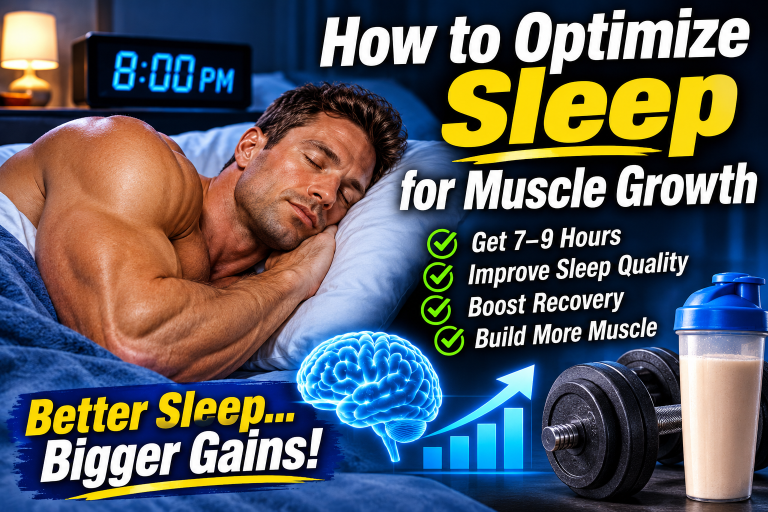
Sleep is one of the most neglected factors in bodybuilding and muscle development. Most people understand the importance of hard training, proper nutrition and supplementation, but there is another critical component of building muscle that often gets overlooked: getting enough quality sleep.
If your goal is to build muscle, increase strength, improve recovery and develop a better physique, you need to pay as much attention to your sleep habits as you do to your workouts.
For optimal recovery and muscle growth, most adults should aim for approximately 7 to 9 hours of quality sleep every night. Some people, particularly those following demanding training programs, may benefit from being toward the upper end of that range.
Here’s something every bodybuilder should understand: You don’t actually build muscle in the gym. You stimulate muscle growth in the gym, but the actual recovery and adaptation process happens afterward.
When you lift weights, you create a training stimulus that signals your body to repair and adapt. Your muscles respond by becoming bigger and stronger, provided you give your body the necessary nutrition and recovery time.
Sleep is one of the most important elements of that recovery process.
In this guide, we’ll examine the relationship between sleep and muscle building, the negative effects of sleep deprivation, and practical ways to improve your sleep so you can get more out of every workout.
Why Is Sleep Important for Muscle Growth?
Sleep plays an essential role in muscle development because it provides your body with an opportunity to recover from the physical demands of resistance training.
Several important processes take place while you’re sleeping, including:
- Muscle protein synthesis and tissue repair.
- Regulation of hormones involved in muscle development.
- Restoration of energy reserves.
- Recovery of the nervous system.
- Regulation of inflammation and immune function.
- Physical and mental recovery from exercise.
1. Muscle Protein Synthesis
Muscle protein synthesis (MPS) is the process through which your body builds new muscle proteins.
Resistance training stimulates muscle protein synthesis, while adequate dietary protein supplies the amino acids needed to repair and build muscle tissue.
Sleep supports this process by providing an important recovery period following exercise.
Research has demonstrated that insufficient sleep can interfere with muscle protein synthesis. In one controlled study, researchers found that a single night of total sleep deprivation reduced muscle protein synthesis by approximately 18% in healthy young adults.
Although this was a relatively small study and should not be interpreted as the exact effect of losing sleep for every individual, it demonstrates how important adequate sleep can be for muscle development.
2. Growth Hormone Release
Human growth hormone (HGH) is an important hormone involved in growth, tissue repair and metabolism.
Your body naturally releases growth hormone throughout the day, with a significant pulse occurring during deep stages of sleep.
Growth hormone plays several roles in the body’s recovery and metabolic processes, including supporting tissue growth and regulating the metabolism of fats and carbohydrates.
This is one reason why getting enough quality sleep is particularly important for bodybuilders.
However, it’s important to understand that simply sleeping longer does not guarantee greater muscle growth or higher growth hormone levels. Proper nutrition, progressive resistance training and overall recovery are all necessary.
3. Testosterone and Muscle Development
Testosterone is an important anabolic hormone that contributes to muscle protein synthesis, strength development and the maintenance of lean muscle mass.
Sleep deprivation can negatively affect the body’s hormonal environment.
Research examining sleep deprivation has found that prolonged total sleep loss can reduce testosterone levels. However, the relationship between partial sleep restriction and testosterone is more complicated, with studies showing varying results.
The takeaway is simple: consistently getting adequate sleep is an important part of maintaining a healthy hormonal environment and supporting your bodybuilding goals.
4. Nervous System Recovery
Heavy resistance training places considerable demands on your central nervous system.
Your nervous system controls muscle contractions, coordination, balance and the ability to produce force.
Insufficient sleep can contribute to mental fatigue, reduced alertness, impaired coordination and decreased exercise performance.
Getting enough sleep helps restore mental and physical readiness so you can approach your next workout with greater energy and concentration.
Benefits of Getting Enough Sleep for Bodybuilding
Consistently getting enough quality sleep offers numerous benefits that extend beyond muscle growth.
Here are some of the most important benefits for bodybuilders, weightlifters and athletes.
More Energy and Alertness
Getting sufficient sleep helps restore energy and reduces daytime fatigue. You’ll be better prepared to handle demanding workouts and everyday activities.
Improved Mental Focus
Concentration is important when lifting heavy weights and performing demanding exercises. Quality sleep supports attention, learning and mental performance.
Better Mood and Emotional Health
Sleep helps regulate mood and emotional responses. People who consistently get enough sleep generally have better emotional regulation and are less likely to experience irritability associated with sleep deprivation.
Stronger Immune Function
Sleep supports normal immune system function. Adequate recovery is important when you’re following an intense training schedule.
Balanced Appetite and Metabolism
Sleep influences hormones involved in appetite regulation, including ghrelin and leptin. Poor sleep can increase hunger and make it more difficult to manage calorie intake.
This can be particularly important for bodybuilders trying to maintain a calorie-controlled diet while preserving muscle mass.
Faster Muscle Recovery and Tissue Repair
Adequate sleep supports the physiological processes involved in repairing and adapting to resistance training.
Improved Strength and Exercise Performance
Quality sleep supports coordination, reaction time, concentration and physical performance. These factors can help you get more out of your training sessions.
Negative Effects of Sleep Deprivation on Muscle Growth
Unfortunately, many bodybuilders sacrifice sleep without realizing how much it can interfere with their progress.
You can have the best workout routine, eat plenty of protein and use quality supplements, but consistently sleeping too little can undermine your results.
Some of the negative effects of insufficient sleep include:
- Low energy and persistent fatigue.
- Cognitive decline and impaired concentration.
- Mental fatigue and reduced motivation.
- Disruptions in normal hormonal regulation.
- Increased stress and potentially elevated cortisol.
- Irritability and mood disturbances.
- Reduced strength and exercise performance.
- Impaired muscle protein synthesis.
- Increased appetite and difficulty controlling calories.
- Reduced recovery capacity.
Sleep Deprivation and Cortisol
Cortisol is often referred to as the stress hormone. It plays an important role in regulating metabolism, blood sugar and the body’s response to physical stress.
Cortisol is not inherently bad. Your body needs it to function properly.
However, inadequate sleep can disrupt normal cortisol regulation and contribute to an unfavorable recovery environment.
In a controlled study examining the effects of one night without sleep, researchers observed increased cortisol levels alongside reduced muscle protein synthesis.
This is another reason why consistently getting enough sleep should be a priority for anyone serious about building muscle.
How Much Sleep Do You Need to Build Muscle?
For most healthy adults, the recommended minimum is at least seven hours of sleep per night.
However, if you’re serious about bodybuilding, aiming for 7 to 9 hours is a practical target.
Your individual sleep requirements will depend on several factors:
- Age.
- Training intensity and frequency.
- Overall physical activity.
- Calorie intake.
- Stress levels.
- Individual recovery requirements.
- General health.
If you’re training intensely five or six days per week, dieting for a bodybuilding competition or performing physically demanding work, you may find that you feel and perform better when you consistently get closer to nine hours.
Remember that spending eight hours in bed doesn’t necessarily mean you’re getting eight hours of actual sleep.
Allow yourself approximately 8 to 9 hours in bed if you need that much time to fall asleep, wake during the night and still obtain your desired amount of sleep.
10 Ways to Optimize Sleep for Muscle Growth
Now that you understand the importance of sleep for muscle development, let’s look at some practical ways to improve both the quantity and quality of your sleep.
1. Maintain a Consistent Sleep Schedule
One of the simplest and most effective ways to improve your sleep is to establish a regular bedtime and wake-up time.
Your body has an internal biological clock known as the circadian rhythm. This system helps regulate your sleep-wake cycle, hormone production, body temperature and other important biological processes.
Going to bed and waking up at approximately the same time every day helps reinforce this natural rhythm.
Try to:
- Go to bed at the same time every night.
- Wake up at approximately the same time every morning.
- Avoid large changes to your sleep schedule on weekends.
- Establish a consistent nighttime routine.
Consistency is more important than occasionally getting an unusually long night’s sleep.
2. Optimize Your Sleep Environment
Your bedroom should be designed to promote relaxation and uninterrupted sleep.
A few relatively simple changes can make a significant difference.
Keep Your Bedroom Cool
Most people sleep better in a comfortably cool environment.
Experiment with your bedroom temperature to find what works best for you.
Make Your Bedroom Dark
Exposure to light can interfere with your body’s natural sleep signals.
Use blackout curtains or blinds if necessary. Consider covering electronic lights and other sources of nighttime illumination.
Reduce Noise
Noise can interrupt sleep even when you don’t fully wake up.
Use earplugs, a fan or a white noise machine if your environment is noisy.
Choose a Comfortable Mattress and Pillow
Your mattress and pillow should provide adequate comfort and support.
If you regularly wake up with aches and pains, your sleeping arrangements may need attention.
3. Control What You Eat and Drink Before Bed
Your evening nutrition can influence how comfortably you sleep.
Avoid going to bed extremely hungry or uncomfortably full.
Large, heavy meals immediately before bedtime can cause digestive discomfort and interfere with sleep.
Also consider limiting:
- Caffeine in the afternoon and evening.
- Alcohol before bedtime.
- Large amounts of fluids immediately before bed.
- Foods that trigger heartburn or digestive problems.
Caffeine deserves particular attention because it can remain active in your system for several hours.
If you’re sensitive to caffeine, consider avoiding it at least six to eight hours before bedtime.
Alcohol may make you feel sleepy initially, but it can disrupt sleep quality later in the night.
4. Establish a Relaxing Bedtime Routine
Many bodybuilders spend their evenings thinking about workouts, work, nutrition and everything they need to accomplish the following day.
Unfortunately, going directly from a stressful activity to bed can make it difficult to relax.
Give yourself approximately 30 to 60 minutes to wind down.
Some activities that may help include:
- Reading a book.
- Taking a warm shower.
- Listening to relaxing music.
- Practicing breathing exercises.
- Stretching gently.
- Preparing your clothes and meals for the next day.
The objective is to create a routine that signals to your body that it’s time to relax.
5. Reduce Screen Time Before Bed
Phones, computers and televisions can keep your brain stimulated when you should be preparing for sleep.
Bright light exposure, particularly in the evening, can interfere with your body’s natural circadian rhythm.
Try turning off electronic devices at least 30 minutes before bedtime.
If you must use a device, reduce screen brightness and avoid stimulating activities such as checking work emails, playing competitive games or scrolling through stressful news.
6. Exercise Regularly, But Manage Training Intensity
Regular physical activity can improve sleep quality.
Resistance training also provides a powerful stimulus for muscle growth, but more training is not necessarily better.
If you’re constantly training to exhaustion without allowing sufficient recovery, you may find that your sleep and overall performance suffer.
Pay attention to your body’s recovery signals.
If you’re experiencing persistent fatigue, declining strength, poor motivation or difficulty sleeping, you may need to reduce training volume or intensity.
Also consider the timing of your workouts.
Some people have no problem training in the evening, while others find intense exercise too close to bedtime makes it harder to fall asleep.
Experiment with workout timing to determine what works best for you.
7. Get Natural Sunlight During the Day
Exposure to natural daylight helps regulate your circadian rhythm.
Try spending some time outdoors in the morning, particularly shortly after waking.
Natural light helps reinforce your body’s internal clock and can make it easier to feel alert during the day and sleepy at night.
You don’t need to spend hours outside. Even a short morning walk can be beneficial.
8. Limit Daytime Napping
A short daytime nap can help restore alertness if you’re feeling tired.
However, long or late-afternoon naps may make it more difficult to fall asleep at night.
If you need a nap, try limiting it to approximately 20 to 30 minutes and take it earlier in the afternoon.
Remember that naps should supplement a good nighttime sleep schedule, not replace it.
9. Manage Stress
Stress is one of the most common reasons people have difficulty falling asleep.
Work, financial concerns, personal responsibilities and even the pressure of preparing for a bodybuilding competition can make it difficult to relax.
Developing healthy stress-management habits can improve your ability to fall asleep and stay asleep.
Consider:
- Deep breathing exercises.
- Walking outdoors.
- Reading.
- Gentle stretching.
- Keeping a regular daily schedule.
You may also find it helpful to write down your thoughts and tasks for the following day before going to bed.
This can help prevent your mind from constantly reviewing everything you need to accomplish.
10. Consider Your Evening Nutrition and Supplements
Your overall nutrition plays an important role in recovery and sleep.
Make sure you’re consuming enough calories, protein, carbohydrates and essential fats to support your training program.
Bodybuilders who are following extremely restrictive diets may experience sleep disturbances, increased hunger and reduced recovery.
Certain nutrients and supplements have also been investigated for their potential effects on sleep.
For example, glycine has been studied for its potential to improve subjective sleep quality when taken before bedtime.
However, supplements should be considered secondary to establishing good sleep habits and maintaining a balanced diet.
HGH Supplements and Sleep
Human growth hormone (HGH) is naturally released by your body, with significant secretion occurring during deep sleep.
This is one reason why sleep and growth hormone are frequently discussed together in bodybuilding.
There are also dietary supplements marketed as HGH support formulas.
These products are not actual human growth hormone, and they should not be confused with prescription HGH therapy.
Some formulas contain amino acids and other ingredients that have been investigated for their potential effects on sleep, stress, recovery and metabolism.
Let’s look at some of the ingredients found in Truly Huge Supplements HGH Factors.
L-Arginine
L-arginine is an amino acid involved in several important biological processes.
It serves as a precursor to nitric oxide, a compound that helps relax blood vessels and support normal blood flow.
Arginine also plays a role in protein metabolism.
It has been investigated for its potential influence on growth hormone secretion.
L-Ornithine
L-ornithine is an amino acid involved in the urea cycle, which helps the body process and eliminate excess nitrogen.
Some research has investigated ornithine supplementation for its potential effects on sleep quality, stress and fatigue.
L-Lysine
L-lysine is an essential amino acid, meaning your body cannot produce it and must obtain it through food or supplementation.
It is required for normal protein synthesis and tissue maintenance.
Lysine has also been studied in combination with other amino acids for potential effects on stress responses.
L-Glutamine
Glutamine is an amino acid that plays several important roles in the body, including supporting intestinal cells and immune function.
It is also involved in nitrogen metabolism and serves as a precursor for several other compounds.
Glutamine is sometimes discussed in relation to GABA, a neurotransmitter involved in regulating nervous system activity.
However, taking glutamine does not necessarily increase brain GABA levels or produce a reliable calming or sleep-promoting effect.
Its potential benefits for bodybuilding recovery and immune support are still being investigated.
Colostrum
Colostrum is the nutrient-rich first milk produced by mammals after giving birth.
Bovine colostrum contains proteins, immunoglobulins and other biologically active compounds.
Research has investigated its potential effects on intestinal health, immune function and exercise recovery.
Some studies suggest possible benefits for gastrointestinal health and certain immune markers.
Glycine
Glycine is an amino acid that plays several important roles in the body.
It is involved in collagen production, protein synthesis and nervous system function.
Glycine has also attracted attention for its potential sleep benefits.
Some small human studies have suggested that taking glycine before bedtime may help improve subjective sleep quality and reduce the time it takes to fall asleep.
One proposed explanation is that glycine may help regulate core body temperature, which is involved in the natural process of falling asleep.
Although the early research is promising, larger studies are needed to establish its effectiveness.
My Experience Using HGH Factors While Preparing for a Bodybuilding Contest
I’ve been involved in bodybuilding for decades, and one thing I’ve learned is that building an impressive physique requires paying attention to more than just your workouts.
Training, nutrition, recovery and sleep all work together.
While preparing for my last natural bodybuilding competition, I used Truly Huge Supplements HGH Factors, a growth hormone support supplement.
During that preparation, I noticed that I was sleeping better, and I was pleased with how well I maintained my muscle mass while dieting very strictly.
I also lost body fat and experienced no noticeable side effects.
Of course, that’s my personal experience, and it doesn’t establish that HGH Factors caused those results or that everyone will experience the same benefits.
Contest preparation involves many variables, including training, calorie intake, protein consumption, supplementation and recovery.
However, I believe that prioritizing sleep and recovery is particularly important when you’re following a demanding bodybuilding diet.
What’s in Truly Huge Supplements HGH Factors?
HGH Factors combines several ingredients discussed above:
- L-Arginine
- L-Ornithine
- L-Lysine
- L-Glutamine
- Colostrum
- Glycine
These ingredients have different biological functions and have been investigated for various aspects of health, metabolism and recovery.
The formula is intended to provide nutritional support rather than replace your body’s natural growth hormone production or prescription medical treatment.
If you’re considering an HGH support supplement, remember that the evidence for meaningful increases in growth hormone, muscle mass or sleep quality from these ingredient combinations remains limited.
You can learn more about the formula here:
Does Sleeping More Build More Muscle?
Not necessarily.
There is a difference between getting enough sleep and assuming that sleeping as much as possible will automatically produce more muscle growth.
Once you’re consistently meeting your individual sleep requirements, additional hours may not provide extra bodybuilding benefits.
The goal is to obtain enough high-quality sleep to support recovery, training performance and overall health.
If you’re currently sleeping only five or six hours per night, increasing that amount to seven, eight or nine hours may be one of the most productive changes you can make to your bodybuilding lifestyle.
Don’t underestimate the importance of consistency.
One night of excellent sleep won’t compensate for weeks of inadequate recovery.
Should You Eat Protein Before Bed for Muscle Growth?
Pre-sleep protein consumption is another strategy worth considering.
Your muscles continue to undergo protein turnover while you’re sleeping, and providing your body with amino acids before bedtime can support overnight muscle protein synthesis.
Research has investigated the effects of consuming approximately 20 to 40 grams of casein protein before sleep.
Some studies suggest that this approach can increase overnight muscle protein synthesis, particularly when combined with resistance training.
Casein is a slowly digested protein that provides a sustained supply of amino acids.
Good options include:
- Casein protein powder.
- Cottage cheese.
- Greek yogurt.
- Other protein-rich foods.
You don’t necessarily need a separate bedtime protein shake if you’re already consuming sufficient daily protein.
For most people trying to build muscle, total daily protein intake and consistent distribution across meals are more important than the exact timing of one particular serving.
If you do want to try taking a protein shake before bed I recommend Truly Huge Supplements Bio-Available Protein.
A Sample Nighttime Recovery Routine for Bodybuilders
If you want to improve your sleep, here’s a simple nighttime routine you can incorporate into your bodybuilding lifestyle.
6:30 PM – Eat Your Evening Meal
Have a balanced meal containing protein, carbohydrates and healthy fats. Avoid excessively large meals immediately before bedtime.
7:30 PM – Finish Stimulating Activities
Avoid additional caffeine, stressful work and other activities that may interfere with relaxation.
8:30 PM – Reduce Screen Time
Dim the lights, put away electronic devices and begin winding down.
9:00 PM – Relax
Read a book, take a warm shower, deep breathing exercises or perform some gentle stretching.
9:30 PM – Prepare for Bed
Make sure your bedroom is dark, quiet and comfortably cool.
10:00 PM – Go to Sleep
If you wake up at 6:00 AM, this schedule provides eight hours in bed.
Adjust the schedule to accommodate your individual sleep requirements and daily responsibilities.
Frequently Asked Questions About Sleep and Muscle Growth
How many hours of sleep do bodybuilders need?
Most adult bodybuilders should aim for 7 to 9 hours of quality sleep every night. Individuals following demanding training programs or restrictive diets may benefit from aiming toward the upper end of that range.
Do muscles grow while you sleep?
Yes. Muscle tissue undergoes repair and adaptation during recovery, including while you’re sleeping. Resistance training stimulates muscle protein synthesis, and sleep provides an important opportunity for recovery and tissue remodeling.
Does lack of sleep prevent muscle growth?
Insufficient sleep can interfere with muscle protein synthesis, recovery, hormonal regulation and exercise performance. Consistently sleeping too little can make it more difficult to build muscle and maintain strength.
What stage of sleep is best for muscle growth?
Deep non-REM sleep is particularly important for physical recovery and is associated with significant growth hormone secretion. However, all stages of sleep contribute to overall health and recovery. You need adequate amounts of both non-REM and REM sleep.
Does growth hormone increase during sleep?
Yes. The body naturally releases growth hormone in pulses throughout the day, with a significant pulse commonly occurring during early-night deep sleep. Healthy sleep helps maintain normal growth hormone secretion patterns.
Can you build muscle with six hours of sleep?
You can still build muscle while sleeping six hours, but this is below the recommended minimum for most adults. Consistently increasing your sleep to at least seven hours may improve recovery, energy and training performance.
Is it better to sleep eight or nine hours for muscle growth?
Both can be beneficial. Individual sleep requirements vary, so the best choice is the amount that allows you to wake up feeling rested and maintain good energy and exercise performance throughout the day.
Should I take protein before bed?
A protein-rich snack or shake before bedtime can help increase overnight muscle protein synthesis. Approximately 20 to 40 grams of casein protein has been investigated in research, although total daily protein intake remains the priority.
Final Thoughts: Make Sleep a Priority for Muscle Growth
If you’re serious about building muscle, improving strength and developing a better physique, don’t make the mistake of treating sleep as an optional part of your bodybuilding program.
You can train hard, follow a carefully planned diet and use quality supplements, but if you’re consistently sacrificing sleep, you’re potentially limiting your results.
Remember that muscle growth requires more than stimulating your muscles with resistance training. Your body needs adequate protein, sufficient calories, recovery time and quality sleep to adapt to the demands of training.
Make getting 7 to 9 hours of sleep a priority. Maintain a consistent bedtime, create a comfortable sleeping environment, manage stress and pay attention to your evening nutrition.
Train hard, eat right, supplement intelligently and get plenty of sleep. Your muscles need all four to reach their full potential.
Shop Truly Huge Bodybuilding Supplements
Email support@trulyhugebodybuilding.com or call (800) 635-8970 with any questions you have and we’ll be happy to help you find the best supplements to help you reach your bodybuilding and fitness goals.