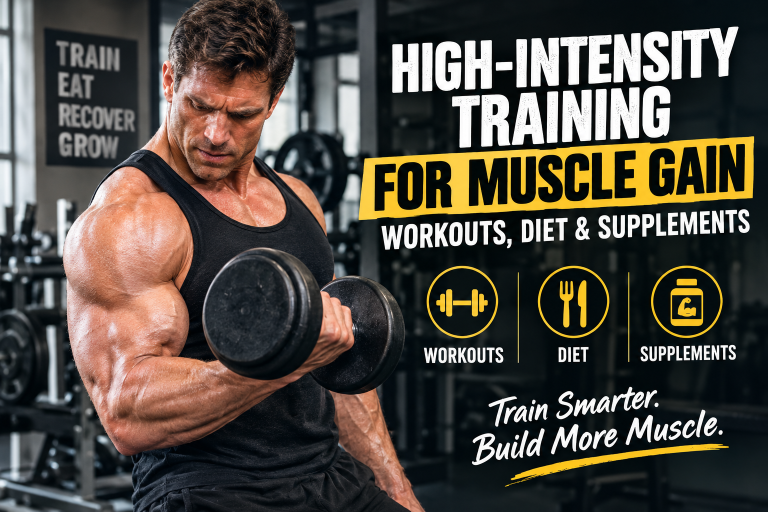
Building muscle doesn’t necessarily require spending hours in the gym every day. In fact, one of the most important lessons I’ve learned during nearly five decades of bodybuilding is that the quality and intensity of your workouts can matter more than the amount of time you spend training.
High-intensity training (HIT) is a bodybuilding approach built around brief, demanding workouts, progressive overload, controlled repetitions, and sufficient recovery between training sessions. Rather than performing endless sets, the goal is to make each working set count and then give your body the time it needs to recover and grow.
My name is Paul Becker. I’m a competitive natural bodybuilder, author, personal trainer, and owner of Truly Huge Bodybuilding Supplements. I’ve practiced high-intensity training for 47 years, studied extensively on the subject, tested numerous training techniques, and had the opportunity to train personally with Mike Mentzer and Casey Viator. I also spoke with Arthur Jones, the inventor of Nautilus exercise machines and the pioneer of high-intensity training and was able to pick his brain.
Over the years, I’ve experimented with different workouts, exercise techniques, nutrition strategies, and supplements. In this guide, I’ll share what I’ve learned about using high-intensity training to build muscle, increase strength, and make the most of your time in the gym.
Whether you’re a beginner looking to build your first substantial amount of muscle or an experienced bodybuilder trying to break through a plateau, this guide will help you understand how to put HIT principles into practice.
What Is High-Intensity Training in Bodybuilding?
High-intensity training is a resistance-training method that emphasizes hard working sets, progressive overload, and adequate recovery rather than simply accumulating a large number of sets and repetitions.
The goal is to stimulate muscle growth with a relatively small amount of high-quality work.
In bodybuilding, the term HIT generally refers to the high-intensity training philosophy associated with Arthur Jones and later popularized by Mike Mentzer. It should not be confused with high-intensity interval training (HIIT), which typically involves repeated bouts of demanding cardiovascular exercise.
Although HIT routines can differ, the basic principles are straightforward:
- Train hard: Make your working sets sufficiently challenging to stimulate adaptation.
- Train efficiently: Focus on productive exercises instead of filling your workout with unnecessary volume.
- Progress over time: Gradually increase repetitions, resistance, or performance while maintaining good technique.
- Allow adequate recovery: Give your muscles and nervous system enough time to recover between demanding workouts.
- Prioritize quality over quantity: More sets are not automatically better if they add fatigue without improving your results.
A key distinction is that intensity in HIT means the degree of effort applied to a set, not simply lifting the heaviest weight possible. You can train intensely with moderate weights, controlled repetitions, and excellent technique.
The Theory Behind High-Intensity Training
During the 1960s and 1970s, many bodybuilders followed high-volume training programs. Some performed numerous exercises and sets for each muscle group, often spending hours in the gym.
Arthur Jones challenged the idea that more training automatically produced more muscle. He argued that many bodybuilders were performing excessive amounts of exercise and that shorter, harder workouts could provide a powerful growth stimulus without unnecessary training.
Mike Mentzer later developed his own Heavy Duty training philosophy, emphasizing brief workouts, demanding effort, and substantial recovery.
The central idea is simple: more is not always better; productive training is better.
That doesn’t mean every bodybuilder should perform only a handful of sets or that high-volume training cannot work. Muscle growth can occur with a range of training volumes and methods. HIT offers an alternative for people who respond well to focused training and want to manage fatigue and recovery carefully.
The Three Core Principles of HIT
1. Harder, more productive workouts
Instead of performing many easy sets, concentrate on working sets that challenge the target muscles. Warm-up sets prepare you for demanding work, while working sets provide the primary training stimulus.
2. Shorter, focused workouts
A HIT workout should have a clear purpose. Select exercises that cover the major muscle groups, perform them with good technique, and avoid adding sets merely to make the workout longer.
3. Adequate recovery between workouts
Muscle growth occurs during the recovery process following training, provided nutrition and sleep are sufficient. Training the same muscles hard again before they have recovered can compromise performance.
The right training frequency depends on workout difficulty, exercise selection, training experience, sleep, nutrition, and individual recovery. Some trainees can progress with three weekly workouts, while others benefit from fewer sessions.
Benefits of High-Intensity Training for Muscle Growth
When appropriately programmed, HIT offers several practical benefits for bodybuilders.
1. Time-efficient workouts
One of the biggest advantages is that you can complete a productive workout without spending two hours in the gym. A focused session may take approximately 30–60 minutes, depending on your warm-ups, exercise selection, rest periods, and training experience.
2. Increased strength
Consistent resistance training improves strength by developing muscular capacity and skill in performing exercises. HIT encourages you to monitor performance and progressively increase the demands placed on your muscles.
3. Muscle mass gains
Challenging resistance exercise stimulates muscle growth when combined with adequate nutrition and recovery. HIT can provide an effective muscle-building stimulus, particularly when your routine includes enough quality work and you consistently progress.
4. Better fatigue management
Reducing unnecessary sets can help manage training fatigue. This is especially useful for people with demanding jobs, family responsibilities, or difficulty recovering from lengthy workouts.
However, HIT is not guaranteed to prevent overtraining. Training to failure too frequently or using excessive advanced techniques can also create recovery problems.
5. Greater focus and workout discipline
A planned HIT session gives every exercise a purpose. Tracking repetitions, resistance, and technique makes it easier to determine whether your training is moving in the right direction.
The Essential Rules of High-Intensity Training Workouts
Before choosing a routine, understand the principles that make HIT work.
Train two to four days per week
For many people, two to four weekly resistance-training sessions provide a practical starting range. Beginners may do well with three full-body workouts, while intermediate and advanced trainees may benefit from split routines.
You don’t need to train every day. Begin with enough rest between demanding sessions and adjust your schedule based on performance and recovery.
Use slow, controlled movements
Control the weight throughout the repetition. Avoid bouncing, jerking, or using momentum to move a load you cannot handle safely.
A controlled lifting phase and controlled lowering phase help maintain tension on the target muscles. There is no universally optimal repetition speed, so focus on consistent technique rather than making every repetition excessively slow.
Apply progressive overload
Progressive overload means gradually increasing the challenge of your training.
For example, if you bench-press 150 pounds for eight controlled repetitions, your next goal might be to complete nine repetitions with the same weight and technique. Once you reach your target repetition range, consider increasing the load slightly.
Record your exercises, weights, repetitions, and any changes in technique. This gives you objective feedback instead of relying on how hard a workout felt.
Train close to muscular failure
Muscular failure occurs when you cannot complete another repetition through the intended range of motion with proper form.
Training close to failure can effectively stimulate muscle growth, but you do not need to reach absolute failure on every set. Beginners should generally stop with a few good repetitions still possible while learning technique. More experienced lifters can use failure selectively, especially on safer isolation exercises and machine movements.
Avoid forced repetitions, heavy negatives, and other high-risk methods without appropriate experience and safeguards.
Make recovery part of your program
Rest days are not wasted days. They allow fatigue to dissipate and prepare you to perform well in your next session.
Pay attention to persistent soreness, declining strength, poor sleep, reduced motivation, and joint discomfort. These may indicate that your training demands need adjustment.
Beginner High-Intensity Training Workout
If you’re new to bodybuilding or returning after a long layoff, I recommend starting with three full-body workouts per week, such as Monday, Wednesday, and Friday.
This schedule gives you a rest day between sessions and allows you to practice the major movement patterns regularly.
Beginner full-body routine
| Exercise | Working sets | Target repetitions |
|---|---|---|
| Squat or leg press | 1–2 | 8–12 |
| Bench press | 1–2 | 6–10 |
| Barbell or chest-supported row | 1–2 | 8–12 |
| Overhead press | 1 | 8–12 |
| Barbell curl | 1 | 10–15 |
| Triceps pushdown | 1 | 10–15 |
| Standing calf raise | 1–2 | 10–15 |
| Ab crunch | 1–2 | 10–20 |
These are suggested working sets, not including warm-ups. Adjust the routine to your ability, equipment, and recovery.
How to perform the beginner routine
Begin each session with a general warm-up and lighter practice sets for the major lifts. Warm up progressively before demanding exercises, especially squats and bench presses.
Perform the exercises with controlled technique and rest long enough to maintain performance. For demanding compound movements, two to three minutes or longer may be appropriate. Isolation exercises often require less rest.
Initially, stop most sets before complete failure. Focus on mastering the movements, establishing consistent technique, and learning how your body responds to training.
As you improve, gradually increase repetitions or resistance. If you’re consistently recovering well and making progress, you can increase the challenge without immediately adding more exercises.
How long should beginners follow this routine?
A reasonable starting point is eight to twelve weeks, although you can continue longer if you’re still progressing. Move to an intermediate split when your training experience, recovery needs, and goals justify a change—not simply because a certain number of weeks has passed.
Intermediate High-Intensity Training Workout
Once you’ve developed a foundation of strength and exercise technique, a split routine can allow you to focus on fewer muscle groups per session.
For intermediate trainees, I recommend alternating Workout A and Workout B, with rest days between workouts.
For example:
- Monday: Workout A
- Tuesday: Rest
- Wednesday: Workout B
- Thursday: Rest
- Friday: Workout A
- Saturday: Rest
- Sunday: Workout B
Continue alternating the workouts the following week. This schedule provides four sessions over seven days, but you can use a slower rotation if recovery becomes an issue.
Workout A: Legs, Back, and Biceps
| Exercise | Working sets | Target repetitions |
|---|---|---|
| Squat | 1–2 | 6–10 |
| Leg press | 1–2 | 10–15 |
| Leg extension | 1 | 10–15 |
| Leg curl | 1–2 | 10–15 |
| Barbell or chest-supported row | 1–2 | 8–12 |
| Lat pulldown | 1–2 | 8–12 |
| Pullover | 1 | 10–15 |
| Barbell curl | 1 | 8–12 |
| Incline dumbbell curl | 1 | 10–15 |
| Hammer curl | 1 | 10–15 |
Workout B: Chest, Shoulders, Triceps, and Calves
| Exercise | Working sets | Target repetitions |
|---|---|---|
| Bench press | 1–2 | 6–10 |
| Incline bench press | 1 | 8–12 |
| Dumbbell fly | 1 | 10–15 |
| Lateral raise | 1–2 | 10–15 |
| Rear lateral raise | 1 | 10–15 |
| Triceps pushdown | 1 | 10–15 |
| Overhead triceps extension | 1 | 10–15 |
| Bench dips or a suitable alternative | 1 | 8–15 |
| Standing calf raise | 1–2 | 10–15 |
| Seated calf raise | 1 | 12–20 |
This is a relatively exercise-rich routine. Because the sessions cover many movements, begin at the lower end of the set recommendations and monitor recovery. You may not need every exercise in each workout, especially if performance starts to decline.
If you struggle to recover, remove redundant exercises, reduce the number of sets, or add another rest day. A longer exercise list is not automatically a better HIT program.
Advanced High-Intensity Training Workout
Experienced bodybuilders who have developed good technique and can assess their recovery may prefer a three-day split.
One example is:
- Monday: Chest and back
- Wednesday: Legs and abdominals
- Friday: Shoulders and arms
This arrangement gives you rest days between training sessions. The routines below are a starting template, not a requirement to take every exercise to failure.
Workout 1: Chest and Back
| Exercise | Working sets | Target repetitions |
|---|---|---|
| Bench press | 1–2 | 6–10 |
| Incline bench press | 1 | 8–12 |
| Dips | 1 | 8–12 |
| Dumbbell fly | 1 | 10–15 |
| Barbell or chest-supported row | 1–2 | 8–12 |
| Lat pulldown | 1 | 8–12 |
| One-arm dumbbell row | 1 | 8–12 |
| Pullover | 1 | 10–15 |
Workout 2: Legs and Abdominals
| Exercise | Working sets | Target repetitions |
|---|---|---|
| Squat | 1–2 | 6–10 |
| Leg press | 1–2 | 10–15 |
| Leg extension | 1 | 10–15 |
| Lying leg curl | 1 | 8–12 |
| Seated leg curl | 1 | 10–15 |
| Standing calf raise | 1–2 | 10–15 |
| Seated calf raise | 1 | 12–20 |
| Ab crunch | 1–2 | 10–20 |
| Leg raise | 1–2 | 10–20 |
Workout 3: Shoulders and Arms
| Exercise | Working sets | Target repetitions |
|---|---|---|
| Overhead press | 1–2 | 6–10 |
| Lateral raise | 1 | 10–15 |
| Rear lateral raise | 1 | 10–15 |
| Barbell curl | 1 | 8–12 |
| Incline dumbbell curl | 1 | 10–15 |
| Hammer curl | 1 | 10–15 |
| Triceps pushdown | 1 | 10–15 |
| Overhead triceps extension | 1 | 10–15 |
| Bench dips or a suitable alternative | 1 | 8–15 |
Important programming note: This advanced split contains several overlapping exercises, and the total workload can become excessive if every set is performed to failure. Start conservatively, remove redundant movements when needed, and reserve the most demanding techniques for selected exercises.
Advanced training should mean better execution and more precise programming—not simply more punishment in the gym.
Advanced High-Intensity Training Techniques
One of the advantages of HIT is that it gives you several ways to make a workout more challenging without continually adding more sets. However, advanced techniques create additional fatigue and should be used selectively.
Here are four techniques worth understanding.
1. Pre-Exhaustion
Pre-exhaustion involves performing an isolation exercise for a muscle immediately before a compound exercise that trains the same muscle.
For example:
- Dumbbell fly followed by bench press
- Leg extension followed by leg press
- Dumbbell pullover followed by a pulling exercise
The idea is to fatigue the target muscle before performing the compound movement.
This technique can increase the challenge of a workout, but it may also reduce the amount of weight you can lift during the compound exercise. Use it when it helps you target the intended muscles without compromising technique or safety.
2. Negative Repetitions
Negative repetitions emphasize the eccentric phase of a movement—the portion in which you lower the weight under control.
For example, when bench pressing, the lowering phase is the negative portion of the repetition.
Eccentric training can be an effective way to challenge muscles, but deliberately overloaded negatives require considerable control and can cause substantial soreness and fatigue. Use ordinary controlled lowering as your foundation. Reserve supramaximal negatives for appropriately experienced trainees with competent assistance and suitable equipment.
3. Rest-Pause Training
Rest-pause training involves performing a challenging set, resting briefly, and then completing additional repetitions with the same load.
For example:
- Perform a set of 10 repetitions.
- Rest for approximately 15–20 seconds.
- Perform a few additional controlled repetitions.
- Stop when technique deteriorates or you reach your planned effort limit.
The short rest allows partial recovery before the next bout of work. Rest-pause training can save time, but it also increases fatigue. Use it on selected exercises rather than applying it to every movement in your routine.
4. Drop Sets
A drop set involves reducing the resistance after a challenging set and continuing with additional repetitions.
For example, perform dumbbell lateral raises until you reach your target effort, reduce the dumbbell weight, and continue with good form.
Drop sets are particularly practical for certain machine and isolation exercises. They are less suitable for heavy compound lifts where fatigue can compromise safety.
How Often Should You Use Advanced Techniques?
You don’t need to use every technique in every workout. In fact, a basic program built around controlled repetitions, progressive overload, and adequate recovery can produce excellent results.
Start by using one advanced technique on one or two exercises per week. Monitor your performance and recovery before adding more.
If your strength is declining, soreness persists, or your joints begin to hurt, reduce the intensity techniques or return to conventional working sets.
Diet for High-Intensity Training and Muscle Gain
Training provides the stimulus for muscle growth, but your diet supplies the energy and building materials your body needs to recover.
If your goal is to gain muscle, your nutrition plan should support demanding workouts without causing unnecessary fat gain.
1. Eat Enough Calories to Build Muscle
For most people seeking to maximize muscle gain while limiting fat accumulation, a modest calorie surplus is a sensible starting point.
A practical approach is to begin around 150–300 calories above estimated maintenance needs and monitor your body weight, waist measurement, gym performance, and recovery over several weeks.
This is a starting estimate rather than a universal requirement. Smaller or less experienced trainees may need different adjustments, and some beginners can build muscle while maintaining their weight.
If your weight isn’t increasing and your training performance has stalled, consider adding a little more food. If your waistline is growing rapidly, reduce the surplus.
2. Get Enough Protein
Protein supplies the amino acids needed to repair and build muscle tissue.
A useful evidence-based target for most healthy adults engaged in resistance training is approximately 1.4–2.0 grams of protein per kilogram of body weight daily. Many people aiming to maximize muscle growth can use a target around 1.6–2.2 grams per kilogram.
For example, a 180-pound bodybuilder weighs approximately 82 kilograms. A daily intake of 130–180 grams of protein is a reasonable practical range, with individual needs depending on training, total calorie intake, and body composition goals.
Good protein sources include:
- Eggs
- Fish and seafood
- Chicken and turkey
- Lean beef
- Milk and yogurt
- Whey protein
- Soy and other complementary plant-protein sources
Distribute your protein across several meals. You don’t have to consume a shake immediately after your final repetition, but eating a protein-rich meal within a few hours of training is a convenient strategy.
3. Eat Carbohydrates to Fuel Intense Workouts
Carbohydrates help replenish muscle glycogen, which is an important fuel source for resistance training.
If you train hard, an extremely low-carbohydrate diet may make it more difficult to maintain workout performance, particularly during higher-volume sessions.
Useful carbohydrate sources include:
- Oatmeal
- Rice
- Potatoes and sweet potatoes
- Whole-grain bread
- Fruit
- Beans and lentils
- Whole-grain cereals
Adjust your carbohydrate intake to your energy needs and training demands. You can experiment with eating a meal containing carbohydrates and protein a few hours before training if you find that it improves your energy and performance.
4. Don’t Neglect Healthy Fats
Dietary fats support normal physiological functions, including the absorption of fat-soluble vitamins and the production of hormones involved in health.
Good choices include olive oil, nuts, seeds, avocados, eggs, and oily fish.
Avoid cutting dietary fat excessively in an attempt to accelerate muscle definition. Instead, maintain a balanced diet that provides sufficient essential fats, protein, carbohydrates, vitamins, and minerals.
5. Hydration Matters
Even modest dehydration can negatively affect exercise performance. Drink fluids regularly throughout the day and pay attention to sweat losses during training.
Water is generally sufficient for typical bodybuilding workouts. Electrolytes may be useful during prolonged training in hot conditions or when sweating heavily.
6. Sleep and Recovery
I consider sleep one of the most overlooked parts of bodybuilding.
Aim for approximately seven to nine hours of sleep per night. Consistent sleep supports recovery, training performance, and the ability to maintain a productive routine.
If you are training intensely but sleeping poorly, adding more sets or more advanced techniques is unlikely to solve the problem. Improve your recovery habits first.
Best Supplements for High-Intensity Training
Supplements should complement a sound training and nutrition program. They cannot compensate for inadequate calories, insufficient protein, poor technique, or a lack of sleep.
The supplements I would prioritize for someone following a HIT program are protein powder, creatine, and amino acid products when they provide a practical benefit beyond an already adequate diet.
1. Protein Powder
Protein powder is one of the most convenient ways to help meet your daily protein target.
Whey, milk, and egg proteins are complete protein sources that provide all nine essential amino acids. Soy protein is also a complete protein source, and other plant-based proteins can contribute effectively to a well-planned diet.
Protein powder can be especially helpful if you have a busy schedule, struggle to eat enough protein from whole foods, or want a convenient post-workout shake.
How to use it: Choose a serving size that helps you meet your daily protein needs. For many products, a serving provides approximately 20–30 grams of protein, although the amount varies by formula.
You don’t need protein powder if you already consume sufficient protein from food. Think of it as a convenient nutritional tool rather than a muscle-building shortcut.
At Truly Huge Bodybuilding Supplements, our Bio-Available Protein Powder is one option for bodybuilders looking for a convenient way to supplement their diet.
2. Amino Acids
Amino acids are the building blocks of proteins. Essential amino acids must come from your diet because your body cannot produce them in sufficient quantities.
Adequate essential amino acid intake supports muscle protein synthesis, while sufficient total protein helps provide the raw materials needed for muscle repair and growth.
Amino acid supplements may be convenient when dietary protein is limited or when a particular product fits your nutrition strategy. However, if you’re already consuming enough high-quality protein, additional amino acids may provide little extra benefit.
It is also important to distinguish between different products. Essential amino acid formulas, branched-chain amino acid formulas, and broader amino acid complexes are not interchangeable.
How to use them: Follow the product label and consider your overall protein intake first. Amino acid supplements should complement complete dietary protein, not replace a balanced diet.
Truly Huge Nitrobol Amino Acid Complex is one option to consider when evaluating amino acid supplements for your training program.
3. Creatine
Creatine is one of the most extensively studied sports supplements for improving high-intensity exercise performance and supporting gains in strength and lean mass when combined with resistance training.
Your muscles use the phosphocreatine system to help rapidly regenerate ATP, the energy currency needed for brief, intense muscular contractions. Supplementing with creatine can increase muscle creatine stores and support repeated high-intensity efforts.
For bodybuilders, potential benefits include:
- Improved performance during repeated intense efforts
- Greater capacity for productive resistance training
- Increased strength when combined with training
- Increased lean body mass over time
- Greater muscle fullness, partly due to increased water stored within muscle tissue
What About Kre-Alkalyn Creatine?
Creatine monohydrate can increase body weight through water retention in muscle, and some people experience gastrointestinal discomfort.
I personally prefer Kre-Alkalyn creatine, because it gives me all the benefits of creatine without the side effects.
Truly Huge Pumped Extreme Kre-Alkalyn Creatine is an option for those interested in this form of creatine.
4. Other Supplements to Consider
Once you have your diet, training, and recovery in place, you may consider other supplements according to your specific goals.
For example:
- Multivitamins: May help fill certain nutritional gaps, but they do not replace a varied diet.
- Vitamin D: May be useful for people who have low vitamin D levels or inadequate intake, based on individual circumstances.
- Caffeine: Can improve alertness and exercise performance for some people, but it can also cause jitters, increase anxiety, or interfere with sleep.
- Electrolytes: May be useful when training conditions cause substantial sweat and electrolyte losses.
Be cautious with products marketed as testosterone boosters, hormone enhancers, or rapid muscle-building formulas. Claims about hormone changes and muscle gains should be supported by reliable human evidence. More ingredients do not automatically mean better results.
If you’re a competitive natural bodybuilder, check your governing organization’s prohibited-substance list and choose supplements with appropriate independent testing when possible.
Common High-Intensity Training Mistakes
Even a well-designed HIT routine can fail if you make avoidable mistakes.
Training to failure on every set
Taking every set to absolute failure can create excessive fatigue, particularly on squats, deadlifts, and other demanding compound exercises. Use failure selectively and stop when technique deteriorates.
Confusing intensity with heavy weights
You don’t have to lift the heaviest weight possible to train intensely. A moderate load taken close to muscular failure with good technique can be effective.
Using too many advanced techniques
Drop sets, rest-pause sets, and negatives can be useful tools, but combining all of them in every workout can interfere with recovery.
Neglecting progressive overload
A hard workout is not necessarily a productive workout. Track your performance and look for gradual improvements in repetitions, resistance, or execution over time.
Resting too little between sessions
If you repeatedly train before recovering, your performance may decline. Adjust training frequency according to your actual recovery rather than following a rigid schedule.
Eating too little to support muscle growth
A calorie deficit can make gaining muscle more difficult, especially for experienced bodybuilders. If your primary goal is muscle gain, make sure your overall energy and protein intake support that goal.
Expecting supplements to do the work
No supplement replaces consistent training, sufficient nutrition, and sleep. Establish those fundamentals before spending money on additional products.
Frequently Asked Questions About High-Intensity Training
Is high-intensity training good for building muscle?
Yes. HIT can be an effective approach to building muscle when it includes challenging resistance training, sufficient weekly training stimulus, progressive overload, and adequate recovery. It is one effective training method, not the only method that works.
How many days a week should I do HIT?
Two to four weekly resistance-training sessions are a reasonable starting range for many trainees. Beginners may start with three full-body sessions, while experienced bodybuilders may prefer a split routine with additional rest between workouts.
The best frequency depends on how much work you perform, how close you train to failure, and how well you recover.
Should I train to failure on every set?
No. Training close to failure can stimulate muscle growth, but absolute failure is not necessary on every set. Beginners should focus on technique and leave a few repetitions in reserve. Experienced trainees can use failure selectively, particularly on exercises where the risk of losing control is low.
How long should a HIT workout last?
Many focused workouts can be completed in approximately 30–60 minutes. The ideal duration depends on the number of exercises, warm-ups, rest periods, and individual needs. Don’t shorten rest periods so much that your performance suffers simply to finish faster.
Is high-intensity training better than high-volume training?
Neither approach is universally superior. Both can build muscle. HIT emphasizes effort and efficient workouts, while higher-volume approaches accumulate more sets. The right choice depends on your response to training, exercise selection, recovery, and personal preferences.
Can beginners use high-intensity training?
Yes, but beginners should first learn correct exercise technique and build a foundation of consistent training. They generally do not need forced repetitions, heavy negatives, or frequent all-out failure sets to make progress.
Can I build muscle with HIT after age 40, 50, or 60?
Yes. Adults can build muscle and strength later in life. Appropriate exercise selection, gradual progression, sufficient protein, adequate recovery, and consideration of any health or mobility limitations are especially important.
What is the best supplement for high-intensity training?
There is no single best supplement for everyone. Protein powder can help meet protein requirements, and creatine monohydrate has strong evidence for supporting high-intensity performance and lean mass gains. Amino acid products may be convenient in specific situations, but adequate total protein remains the priority.
How long does it take to see results from HIT?
Beginners may notice strength improvements within the first several weeks. Visible muscle growth generally takes longer and depends on training consistency, nutrition, genetics, sleep, and starting experience. Evaluate progress over months rather than expecting dramatic changes after a handful of workouts.
My Final Thoughts on High-Intensity Training
After 47 years of practicing high-intensity training, studying different approaches to bodybuilding, and learning from Mike Mentzer, Casey Viator, and Arthur Jones, I believe the most important lesson is that your workout should be designed to stimulate progress, not simply exhaust you.
You don’t have to spend hours in the gym to build an impressive physique. You need a sensible training program, hard and controlled working sets, progressive overload, sufficient recovery, and a diet that supports your goals.
Start with the routine that matches your experience level. Learn proper technique, keep a training log, and make gradual improvements. Add advanced techniques only when they serve a clear purpose.
Pay equal attention to your nutrition. Eat enough calories and protein to support muscle growth, consume adequate carbohydrates to fuel your workouts, include healthy fats, and get sufficient sleep.
Finally, use supplements to complement your efforts rather than replace the fundamentals. Protein powder and creatine are practical options for many bodybuilders, while other supplements should be evaluated according to their ingredients, evidence, and relevance to your individual needs.
At Truly Huge Bodybuilding Supplements, we offer bodybuilding and fitness supplements designed for people who take their training seriously. If you need help choosing products for your goals, consider your current diet, training experience, and whether your priority is muscle gain, strength, or fat loss.
Train intelligently. Recover properly. Eat to support your goals. Keep progressing.
Paul Becker
Competitive Natural Bodybuilder, Author, Personal Trainer, and Owner of Truly Huge Bodybuilding Supplements
Visit the Truly Huge Bodybuilding Supplement Shop to explore our products and learn more about bodybuilding, training, and nutrition.
Email support@trulyhugebodybuilding.com or call us at (800) 635-8970 with any questions you have about training, diet or supplements to help you reach your muscle building goals.